

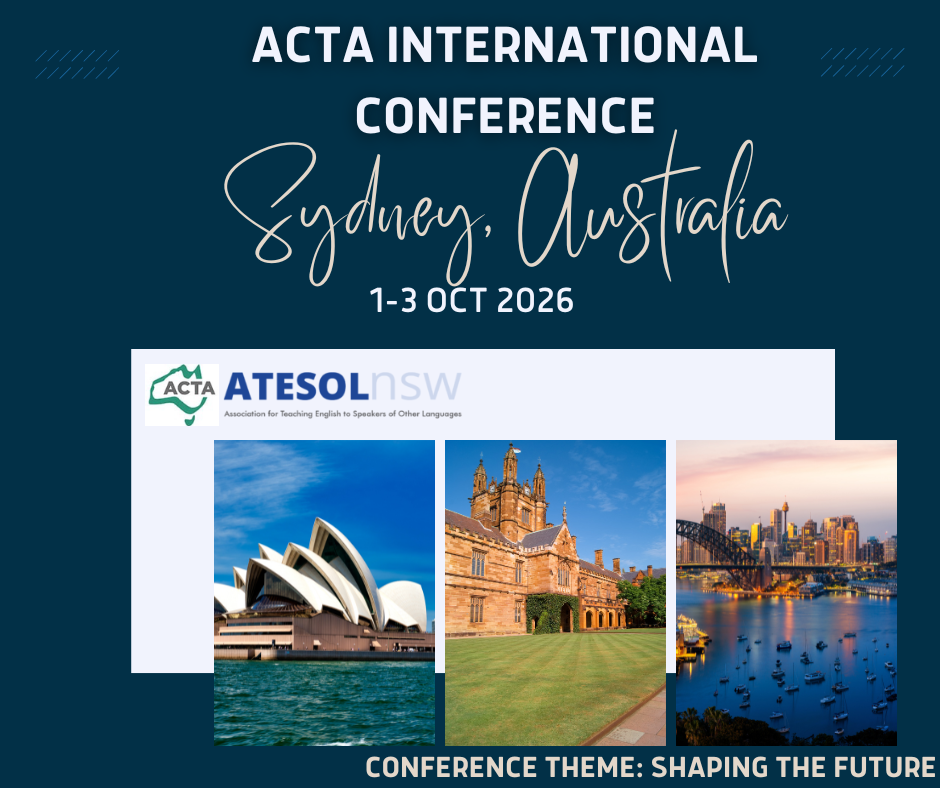
ACTA International Conference 2026
Shaping the Future
ACTA International Conference 2022
Pushing the Boundaries
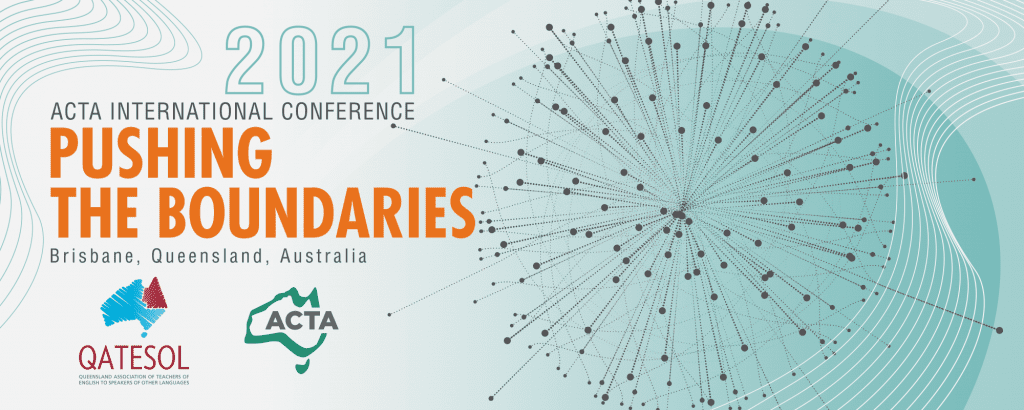
Hosted by QATESOL
ACTA International Conference 2018
English Language Learning in a Mobile World
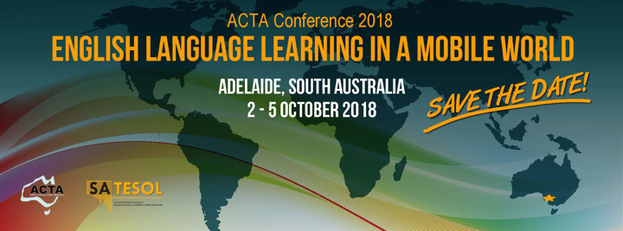
Hosted by SATESOL
ACTA-ACAL Conference 2016
Diversity: Exchanging Ways of Being

Hosted by WATESOL. Joint conference hosted in conjunction with Australian Council of Adult Literacy (ACAL) and WACAL
ACTA International Conference 2014
Meeting the Challenge
ACTA International Conference 2012
TESOL as a Global Trade - Ethics, Equity and Ecology
Hosted by ATESOL NSW
ACTA International Conference 2010
Redefining "TESOL" for the 21st Century: Language learning and teaching for the future
Hosted by QATESOL
ACTA International Conference 2022
Pushing the Boundaries
Hosted by QATESOL
Conference Details
Program Outline
The conference will bring together national and international educators, researchers, and leaders to explore emerging challenges and opportunities in the TESOL field in early childhood education, schools, universities, and industry.
Areas will focus on developments in policy, pedagogy and research in:
- national and international state of English as an additional language or dialect education, leadership and teacher education
- multilingual learner populations – child and adult Indigenous, immigrant, refugee, transnational and foreign English language learners
- English as a second language and literacy learning in education, including in English medium instructional and bilingual/multilingual settings.
The ACTA ATESOL Conference 2026 Full Program is now available.
- Please go to Program for more details about individual sessions and speakers.
- Click here for a PDF copy of the program schedule.
Note that you can just register for one day of the conference - note that Saturday is focused on school-related issues, so ideal for K-12 teachers and teacher educators, Friday is focused more on adult and tertiary issues but both days are still full of exciting events that will appeal to everyone
To register for the conference,
- Go to the ACTA Conference Registration Page
- Scroll down to 'New here? Sign up to Oxford Abstracts'. (Note that this is the link to use for registration: We are just using the Oxford Abstracts portal.)
- Create an account and proceed to registration, as directed.
Venue
The conference will be held at the University of Sydney, Camperdown, Sydney, with all major events, catering and exhibitors in the Eastern Avenue Auditorium and its foyer and surrounding seminar rooms Building F19. The optional workshops and pre-conference meetings will be held in the Education Building (A35). There are multiple public transport options to the venue and paid carparking on campus.
Accommodation
Please note that you will need to make your own accommodation arrangements but there are many hotels and other accommodation options near the venue, easily identified online through major booking companies.
Food
There will be a reception with snacks and drinks following the opening plenary session on Thursday evening, and lunch and morning and afternoon refreshments will be provided on the second and third day of the conference. There will be an option to join small groups to eat out at nearby restaurants on Friday evening, but the cost will vary depending on the restaurant and is not included in the registration fee. Those attending the optional workshops on Thursday will need to purchase their own refreshments and lunch.
Registrations close at midnight on Sunday 27 September 2026!
Conference Registration Dates and Fees
Memberships |
Full rate |
|---|---|
| 01/06/26 - | |
|
Standard registration ACTA/ATESOL member* |
$550 |
|
Student registration ACTA/ATESOL Member* |
$300 |
|
Standard registration non-member |
$650 |
|
Student registration non-member |
$350 |
|
1 day registration |
$300 |
*All cancellations must be made in writing to the secretariat Mark Fraser at . A full refund of registration fee will be given before 1 May 2026. 50% refund will be given before 30 September 2026. No refunds will be made after 30 September 2026, but substitute delegates may be accepted.
*For a list of member associations, scroll to the bottom of ACTA's home page
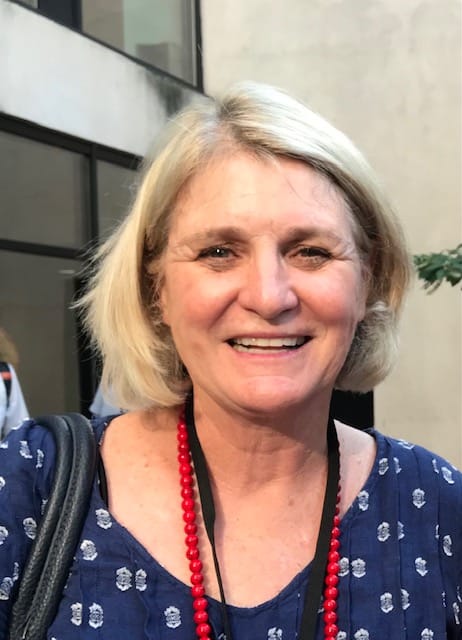




Shaping your Future: Enacting EALD policy through both-ways practice in first Nation Contexts
Rhonda Oliver, Curtin University, Western Australia
Current Australian educational policies are inclusive of Aboriginal and Torres Strait Islander students and their languages, acknowledging they are fundamental to the identity of First Nation peoples. Within the relevant curriculum documents there are such terms as ‘recognition’, ‘language’, ‘culture’, ‘diversity’, and ‘respect’. Yet, despite a United Nations Declaration pointing to the right of Aboriginal and Torres Strait Islander peoples to have access to education in and about their own languages, language rights are not a feature of English as an Additional Language or Dialect (EAL/D) policies. As a result, students who speak such a language, a contact language (i.e., a creole) or a dialect such as Australian Aboriginal English, often do not have the opportunity to use their full linguistic repertoire as a mechanism for scaffolding their learning. In effect, this is discriminatory practice as the learning environment is not equitable with those who enter school from diverse language and cultural background having far less access to the content and understandings encapsulated within the classroom.
The focus of the Australian Curriculum is very much on assisting EAL/D so that they develop proficiency in Standard Australian English (SAE). Fortunately, embedded in the various and complex policy documents are affordances for inclusion of languages and culture. For example, in the teacher resource ‘EAL/D Learning Progression: Foundation to Year 10’ it is indicated that when students are developing English they will “continue to use first language, culture and experiences, when given the opportunity” (p.38 - italics added).How these opportunities might be created remains a key challenge for teachers - a challenge that ACARA (2015) implies by the statement that “high levels of explicit teaching of specific EAL/D skills are required from both the specialist teacher and the classroom teacher” (p.9).In this presentation I describe how this challenge might be met and how opportunities for First Nation EAL/D learners can be created, specifically scaffolding their learning by using ‘Both-ways’ or ‘two-ways’ learning. I will do this by using examples taken from a variety of schools across the nation. These serve to illustrate how both-ways education recognises and acknowledges that First Nations students do come to school with cultural knowledge, skills and understandings underpinned by their linguistic repertoires (Ober, 2009). They also show how it is possible to use a ‘both-ways’ approach to target students’ needs and interests and build upon these to set students up for success.
Biography
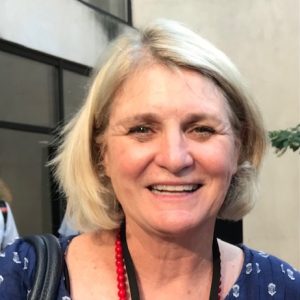
Professor Rhonda Oliver, Curtin University, WA, has researched extensively and is widely published in the areas of second language and dialect acquisition, age differences, and task-based language learning. Over the years many of the participants in her research have been children and adolescents learning a second language or dialect, a heritage language, and in CLIL and TBLT contexts. Her more recent work includes studies within Australian Aboriginal education settings. Her extensive publication record includes her award-winning textbook Indigenous Education in Australia Learning and Teaching for Deadly Futures.

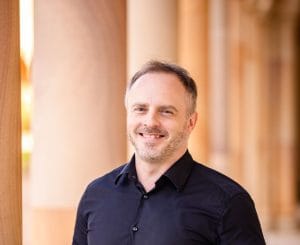 Peter Crosthwaite is an Associate Professor in the School of Languages and Cultures at UQ. His areas of research include corpus linguistics and the use of corpora for language learning (known as 'data-driven learning'), as well as computer-assisted language learning, and English for General and Specific Academic Purposes. He is the Editor-in-Chief for the Australian Review of Applied Linguistics (from 2024) and serves on the editorial boards of key journals including IRAL, Journal of Second Language Writing, Journal of English for Academic Purposes, CALL and System.
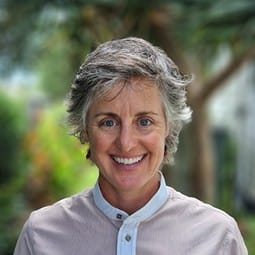 Dr Lucy Macnaught is a Senior Lecturer in the role of Learning Advisor at Auckland University of Technology. She collaborates with faculty to teach academic literacy within coursework and research programs. Her research interests include: embedded approaches to academic literacy development, including integrating AI and designing AI agents; classroom discourse analysis; and multimodal metalanguage. Her book,
  Benjamin Luke Moorhouse (SFHEA) is an Associate Professor in the Department of English, City University of Hong Kong. He has extensive experience as a teacher educator and primary school English-language teacher. He has received several teaching awards, including the President’s Award for Outstanding Performance in Individual Teaching from Hong Kong Baptist University in 2023. Benjamin’s research has appeared in international journals, including System, TESOL Quarterly, TESOL Journal, RELC Journal, and ELT Journal. He is the author of Generative Artificial Intelligence and Language Teaching (Cambridge University Press, 2025).
 Joana Duarte is full professor of Educational Sciences at the Faculty of Behavioural and Social Sciences, University of Groningen and director of the teacher education department. Her research expertise spans multilingualism and education, diversity and inclusion, global citizenship education, language didactics, and minority languages. Her work explores how learners from diverse linguistic and cultural backgrounds navigate educational systems and how their multilingual repertoires can be harnessed to promote equity and inclusion. Through empirical and policy-oriented research, she investigates pedagogical innovations that support minority-language speakers and aims to inform teacher education and professional development.

 Dr Sue Creagh is an honorary senior lecturer at the University of Queensland. While at UQ Sue taught both undergraduate and post graduate courses in EAL/D for teacher education programs. Sue’s research has focused on the performance of EAL/D students in NAPLAN, and policy issues in relation to the identification and assessment of EAL/D learners with a specific focus on the needs of EAL/D learners of refugee background. Prior to working in higher education, Sue was an ESL teacher for many years in Queensland.
 Emma Rutherford Vale is an experienced literacy educator with a background in EALD education. She has worked as a cross curriculum literacy instructor, literacy consultant and teacher educator in the areas of TESOL and English language and literacy at the University of Wollongong and University of Tasmania. Emma is currently completing her Doctoral Thesis exploring writing development at the transition from primary to high school in science. Emma’s research interests include writing pedagogy, the role of knowledge about language in classroom instruction and language development across the years of schooling.